What are Contrails?
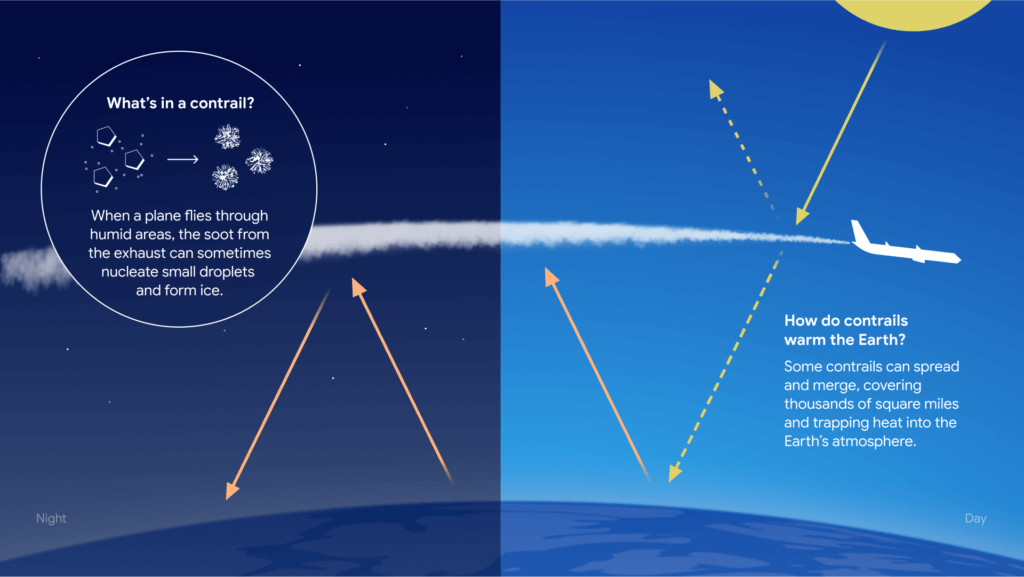
Contrails, short for condensation trails, are line-shaped clouds often seen in the sky behind aircraft. These clouds form when the hot, humid exhaust from an airplane’s engines meets the colder, lower-pressure atmosphere at high altitudes. The water vapor from the exhaust rapidly cools and condenses around small particles like soot or dust in the aircraft’s exhaust, leading to the formation of ice crystals. These ice crystals are what make up the visible contrails. Their impact on the environment is significant, as they can linger in the sky for hours, trapping heat in the Earth’s atmosphere and contributing to global warming.
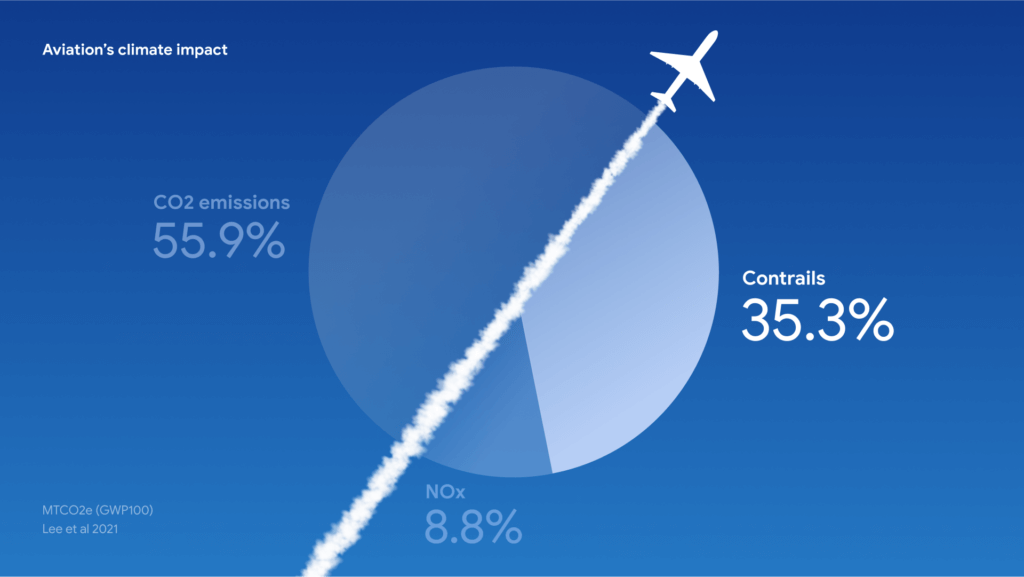
Impact: As the world focus the pressing issue of climate change, a notable contributor has been the aviation industry, specifically through the formation of contrails. These line-shaped clouds created by airplanes are more than just a visual phenomenon; they have a significant impact on global warming.
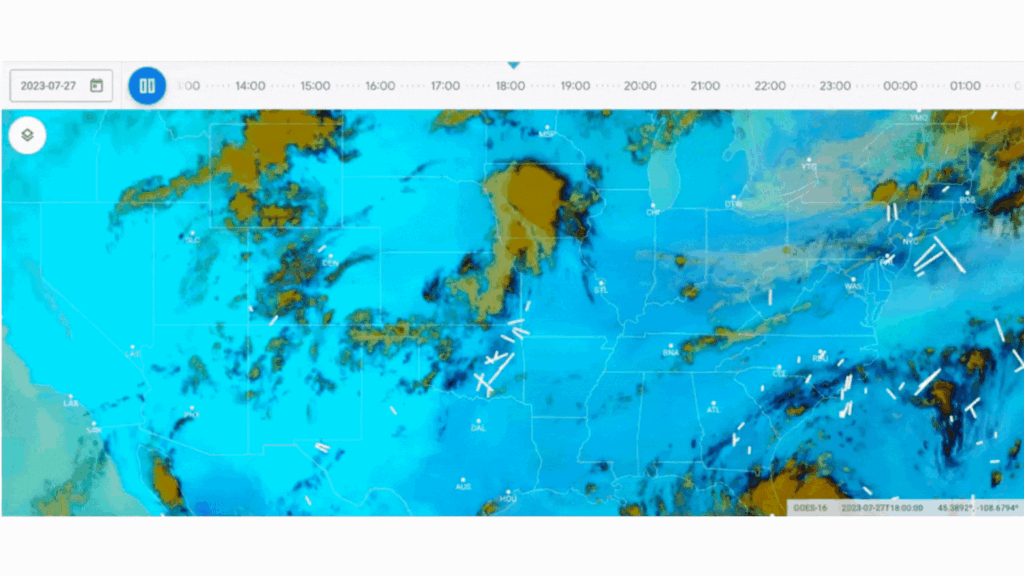
Google AI has taken a pioneering step in addressing this challenge. By leveraging vast amounts of weather, satellite, and flight data, their AI system can predict when and where contrails are likely to form. This innovative approach enables pilots to adjust flight altitudes, avoiding areas with high humidity where contrails form.
In collaboration with American Airlines, Google AI’s contrail prediction model was put to the test. Over six months, pilots conducted 70 test flights using AI-based predictions to avoid contrail formation zones. The results were promising, showing a 54% reduction in contrail formation compared to flights without AI assistance.
Although flights avoiding contrails burned slightly more fuel, the overall impact on fuel consumption was minimal. This positions contrail avoidance as a cost-effective climate solution, with potential costs ranging between $5-25 per ton of CO2 equivalent.
Google AI’s approach, combining advanced computer vision models with large-scale data analysis, marks a significant advancement in the aviation industry’s efforts to reduce its climate impact. As more airlines adopt these AI insights, we could see a substantial decrease in aviation-induced warming, making a meaningful contribution to global climate goals.
Stay informed about the latest developments in AI and climate change mitigation by following our blog. Together, we can support innovative solutions that help create a more sustainable future.